
The widespread use of social media platforms such as WhatsApp, TikTok, Facebook Messenger, Instagram, and Telegram has created new opportunities for communication among refugee communities across Europe. However, these platforms have also become tools for online harassment, including sexual harassment directed at Afghan women and girls living in European countries.

Many Afghan women refugees report receiving unwanted messages, sexually explicit content, repeated contact requests, threats, and other forms of online abuse from individuals who misuse social media to target vulnerable women. Such behavior can have serious psychological, social, and emotional consequences.
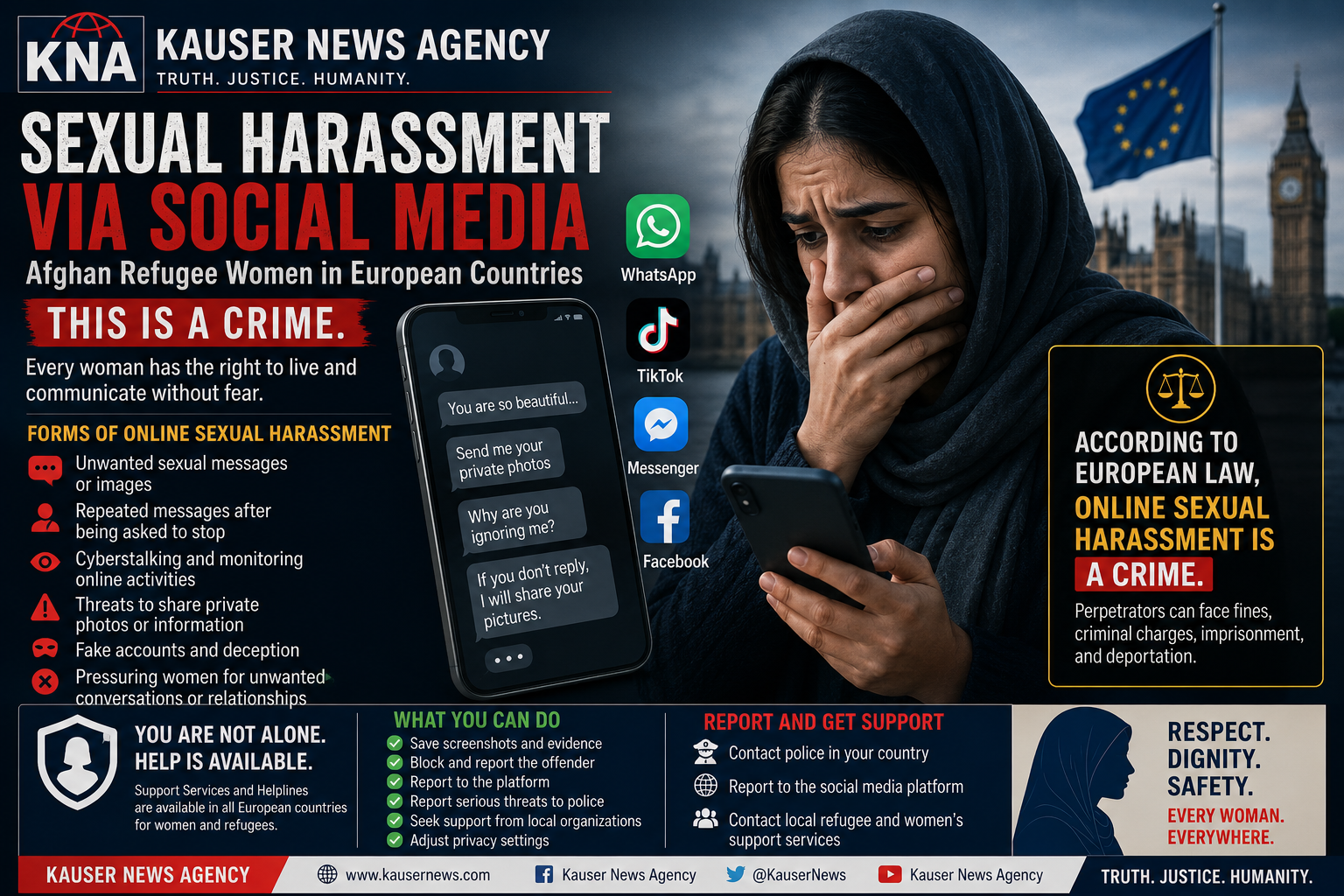
Online sexual harassment may include:
- Sending unwanted sexual messages or images.
- Repeatedly contacting women after being asked to stop.
- Making sexually explicit comments on social media profiles.
- Threatening to publish private photographs or information.
- Cyberstalking and monitoring online activities.
- Creating fake accounts to deceive or harass women.
- Pressuring women to engage in unwanted online conversations or relationships.
These actions can occur through WhatsApp, TikTok, Facebook Messenger, Instagram, and other communication platforms.
Across many European countries, online sexual harassment is considered a serious offense. While laws differ between countries, conduct such as cyberstalking, harassment, threats, non-consensual sharing of intimate images, and repeated unwanted communications may violate national criminal laws.
Authorities in countries including Germany, France, Sweden, the Netherlands, Belgium, Austria, and other European states have legal mechanisms to investigate and prosecute individuals who engage in online harassment.
In addition, major social media companies have policies prohibiting harassment, bullying, sexual exploitation, and abusive behavior. Users who violate platform rules may face account suspension, removal of content, or permanent bans.
Afghan women refugees may face unique challenges when dealing with online harassment. Many are rebuilding their lives after displacement, conflict, and migration. Online abuse can increase feelings of insecurity, isolation, and fear.
Some victims may hesitate to report incidents due to cultural pressures, concerns about privacy, or fear of retaliation. Experts encourage victims to document evidence, block offenders, and seek assistance from local authorities or support organizations.
To reduce online harassment, experts recommend:
- Reporting abusive accounts to social media platforms.
- Saving screenshots and evidence of harassment.
- Using privacy settings to limit unwanted contact.
- Blocking individuals who engage in abusive behavior.
- Reporting serious threats or criminal conduct to police.
- Seeking support from victim assistance organizations and refugee support services.
Online sexual harassment is not merely inappropriate behavior; in many circumstances it may constitute a criminal offense under European law. Protecting Afghan women refugees from digital abuse requires cooperation among law enforcement agencies, social media companies, community leaders, and civil society organizations. Every individual has the right to use social media free from harassment, intimidation, and abuse.