

Kauser News Agency | Investigation and Analysis | October 16, 2026
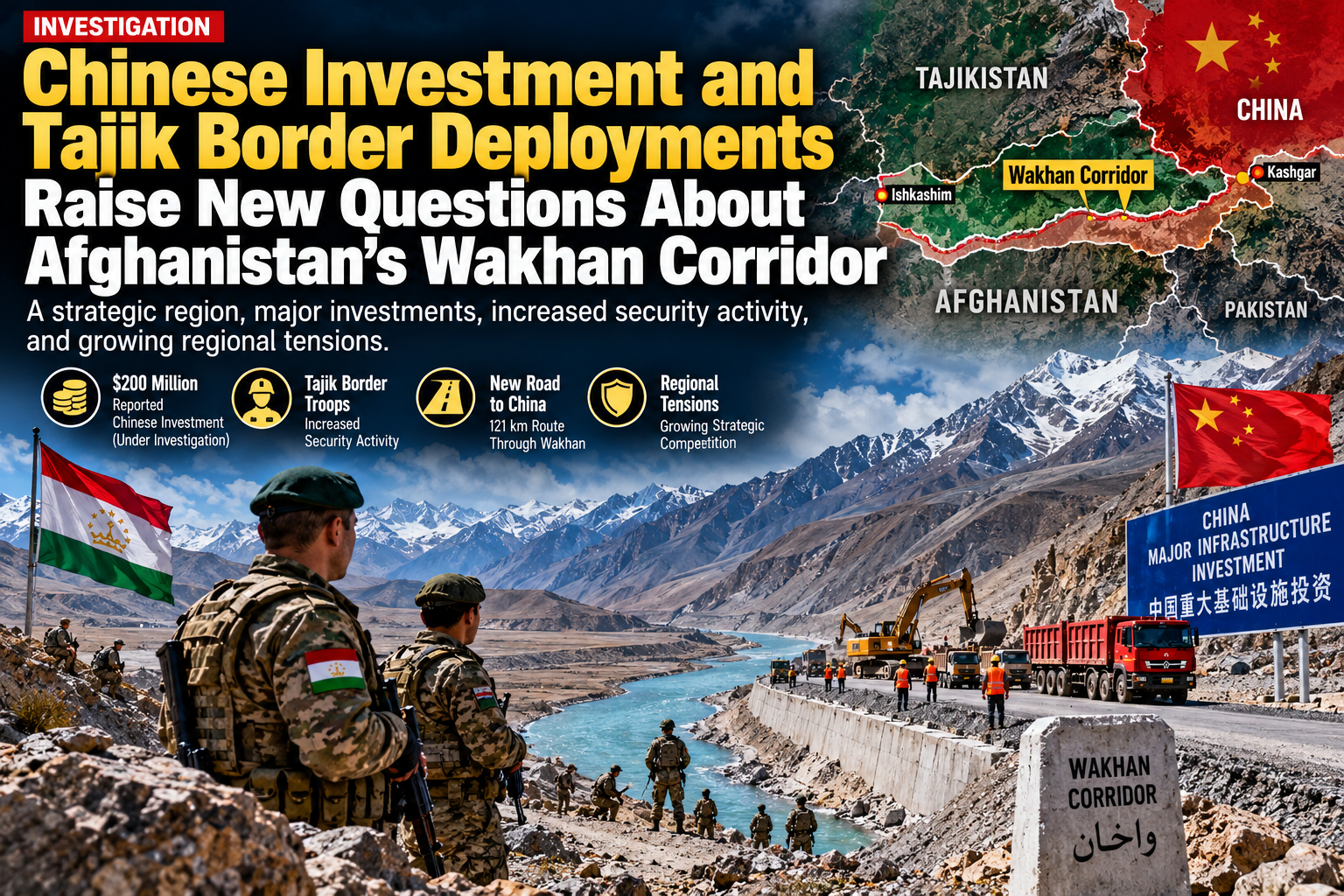
Afghanistan’s Wakhan Corridor has returned to the center of regional security discussions as road construction approaches the Chinese frontier and China-backed infrastructure work continues in neighboring Tajikistan. The developments raise questions about Beijing’s economic interests, Tajik border security and how much influence outside powers may gain in this remote Afghan region.
Claims circulating about a new $200 million Chinese investment agreement for Wakhan and Tajik troops entering Afghan territory remain unverified. Available reporting documents related—but different—developments across the border in Tajikistan. There is no verified evidence that China or Tajikistan has taken control of Afghan territory.
Afghanistan’s road toward China
On October 4, Taliban authorities inaugurated a road of approximately 121 kilometers through Wakhan toward China, describing it as a potential economic link. Completion of an Afghan-side road does not mean the Chinese border is open for routine commercial traffic. Subsequent reporting indicated that a regular commercial crossing was not yet operating.
Where the Chinese financing is documented
Reporting on the Dushanbe–Kulma highway in Tajikistan describes Chinese grant financing of approximately $230 million. The highway is on Tajik territory and is distinct from the Afghan Wakhan road. That project may help explain reports of a Chinese investment figure near $200 million, but it does not verify a $200 million agreement transferring control or financing an Afghan Wakhan project.
Why border security is tightening
Attacks that killed Chinese nationals near the Tajik–Afghan frontier in late 2025 prompted heightened security concerns. Reporting in 2026 described Chinese workers returning to the Tajik highway project under enhanced protection, including Tajik security personnel. This is not proof of Tajik troops deploying inside Afghanistan. Separate research has documented a history of Chinese security assistance and cooperation in Tajikistan near the Afghan frontier.
The strategic interests
China seeks to protect personnel and investments, reduce threats linked to militancy and retain future trade options. Tajikistan wants secure borders and the economic benefits of roads and cross-border commerce. The Taliban administration seeks trade routes, revenue and greater access to neighboring markets. Their interests may overlap without any agreement changing territorial sovereignty.
Questions requiring evidence
Kauser News has not independently confirmed the alleged new $200 million Wakhan agreement, Tajik military deployment on Afghan soil or a transfer of Afghan administrative authority. Verifying these claims would require the actual agreement, attributable official statements, reliable geolocated imagery, procurement records or independent on-the-ground corroboration. An AI illustration is not evidence of such events.
Assessment: The confirmed story is expanding transport infrastructure and heightened security around the Afghan–Tajik–Chinese frontier. A territorial takeover remains an unsubstantiated allegation.
Sources: Pajhwok: Wakhan road inauguration; RFE/RL: road and border status; Silk Road Research: Chinese infrastructure financing in Tajikistan; The Diplomat: security for Chinese road workers; National Bureau of Asian Research: regional security background.
Featured image is AI-generated. It depicts hypothetical troops, infrastructure and maps, not verified events.




Leave a Reply