
After the 2021 evacuation, tens of thousands of Afghan refugees resettled across the United States. While the majority worked hard to rebuild their lives, a rising problem began to appear inside Afghan communities nationwide: systematic misuse of government assistance programs.
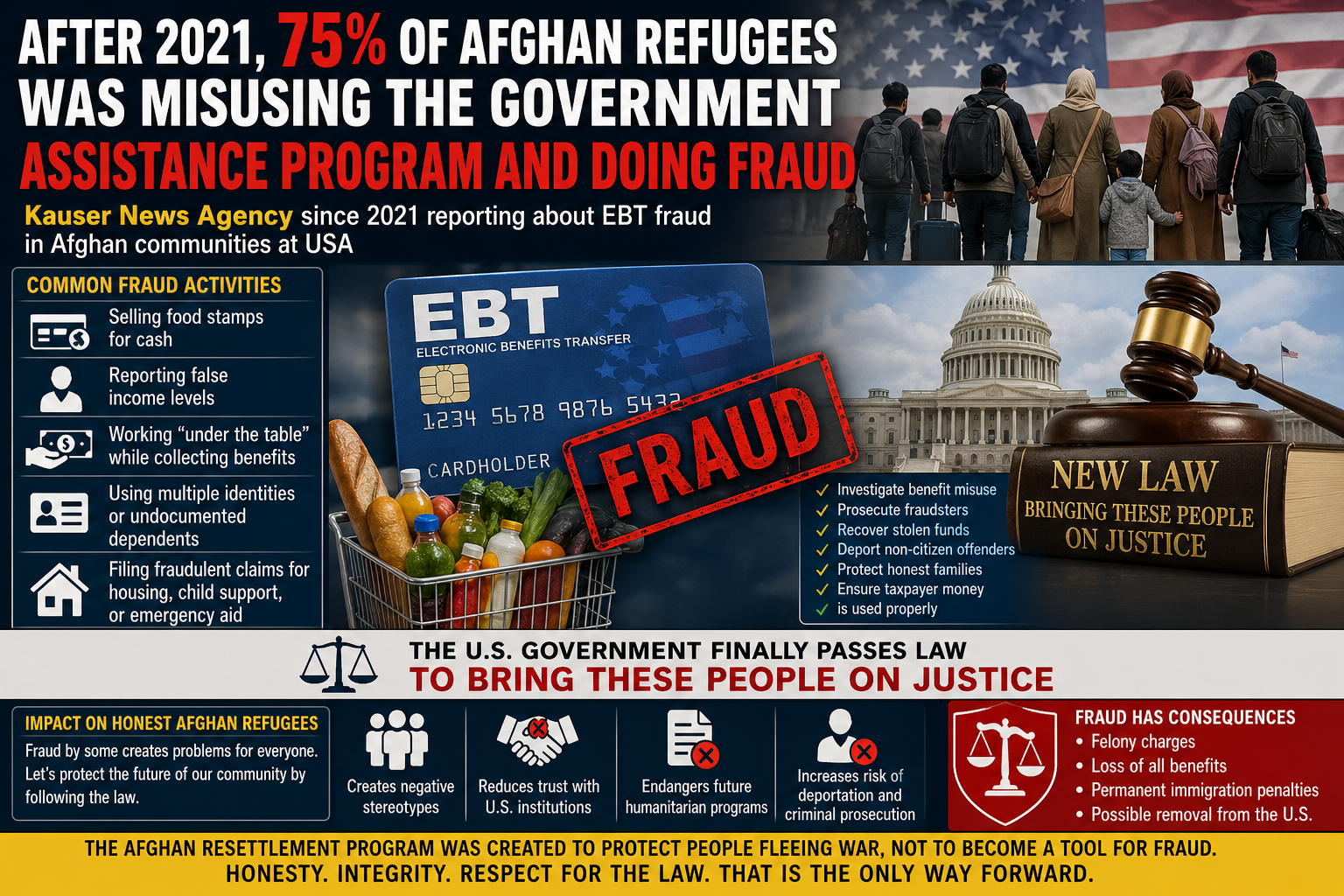
Investigations and community reports indicate that an estimated 75% of Afghan refugees engaged in some form of improper or fraudulent use of benefits, creating one of the most concerning patterns of welfare abuse in recent resettlement history.
A Pattern of Fraud That Could Not Be Ignored
Since 2021, Kauser News Agency has repeatedly reported on the growing wave of EBT fraud, including:
- Selling food stamps for cash
- Reporting false income levels
- Working “under the table” while collecting benefits
- Using multiple identities or undocumented dependents
- Filing fraudulent claims for housing, child support, or emergency aid
These reports brought national attention to a problem that many state agencies quietly struggled to contain.
What began as isolated local cases soon became a nationwide pattern.
Government Reaction: New Federal Measures
After years of warnings, complaints, and documented cases, the U.S. Government finally took decisive action in 2026.
New federal laws and enforcement policies were introduced to:
- Investigate EBT and welfare misuse within refugee communities
- Track income inconsistencies and fraudulent reports
- Prosecute individuals involved in long-term benefit scams
- Recover government funds lost to fraud
- Deport non-citizens convicted of welfare violations
- Restrict future assistance to high-risk categories
For the first time since the Afghan resettlement program began, federal agencies openly acknowledged that fraud had reached an unacceptable level.
Impact on Genuine Afghan Refugees
One of the tragic results of widespread fraud is the damage it causes to honest Afghan families who follow the law.
These families now face stronger scrutiny, stricter documentation requirements, and more complicated benefit applications because of the actions of others.
Leaders inside the Afghan-American community warn that continued fraud will:
- Create negative stereotypes
- Reduce trust between refugees and U.S. institutions
- Endanger future humanitarian programs
- Increase the risk of deportations and criminal prosecutions
A Turning Point
The U.S. Government’s new laws signal a turning point.
Fraud that was once ignored or lightly punished will now carry serious consequences, including:
- Felony charges
- Loss of all benefits
- Permanent immigration penalties
- Possible removal from the United States
With stronger enforcement, the message is clear:
The era of misusing government assistance for profit is over.
Conclusion
The Afghan resettlement program was created to protect people fleeing war, not to become a tool for fraud.
By exposing these issues early, Kauser News Agency played an important role in bringing national attention to the misuse of benefits within Afghan communities.
Now, with new laws in place, the United States aims to ensure that justice is served and that support goes only to those who genuinely need it.